Beyond the Tourist Trail: Learning to Cook a Traditional Village Meal
Hannah Brooks
Safari Writer
You have eaten the rice and curry. You have tasted the spice. But do you know how to balance the fire of the chili with the creaminess of the coconut?
In Udawalawe, the best souvenir you can take home isn't a fridge magnet or a carved wooden elephant. It is the knowledge of how to recreate the magic of Sri Lankan cuisine in your own kitchen. While many hotels offer "cooking demonstrations" where a chef in a tall white hat talks while you watch, the real magic happens in the village cooking classes.
These aren't sterile masterclasses. They are messy, smoky, hands-on experiences often hosted in a local family's outdoor kitchen. Here is why trading a safari drive for a cooking apron might be the highlight of your trip.
The "Dara Lipa" Experience
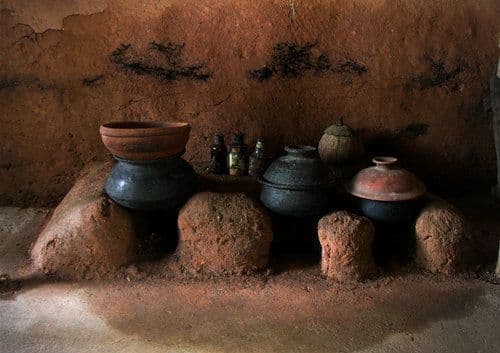
The first thing you will notice is that there is no gas stove.
Traditional village cooking happens on a Dara Lipa a wood-fired hearth built from clay. Three stones or raised clay mounds hold the pots, and firewood is fed underneath.
This isn't just about nostalgia; the smoke from the firewood infuses the clay pots and the food with a distinct, earthy smokiness that a gas stove simply cannot replicate. You will learn how to manage the heat by pulling logs out or pushing them in a skill that requires surprising intuition.
Harvest to Table
In a village cooking class, the ingredients don't come from a supermarket plastic bag. Often, the class begins with a walk through the garden.
You might pick the Gotukola (pennywort) for the salad straight from the ground. You will learn to identify the Curry Leaf tree (Karapincha) and strip the aromatic green leaves that form the backbone of almost every Sri Lankan dish. You will see where the green chilies grow and maybe even help harvest a coconut. This connection to the land makes the final meal taste infinitely better.
The Coconut Test
There is a local saying that you can judge a cook by how well they scrape a coconut.
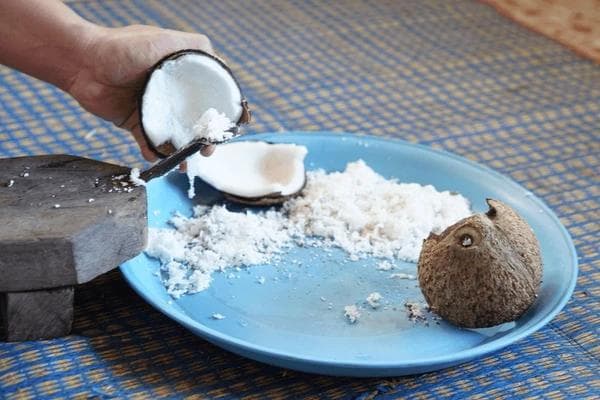
Coconut milk is the lifeblood of Sri Lankan curry. You won't be opening a tin. You will sit on the Hiramanaya a low wooden stool with a serrated steel blade attached to the front.
You will learn the rhythmic art of scraping the fresh coconut meat into fine, snowy flakes. It is a workout! You will then mix these flakes with water and squeeze them by hand to extract the thick "first milk" and the thinner "second milk." Understanding the difference between these two milks is the secret to a rich, creamy curry that doesn't split.
Ancient Tools: The Miris Gala
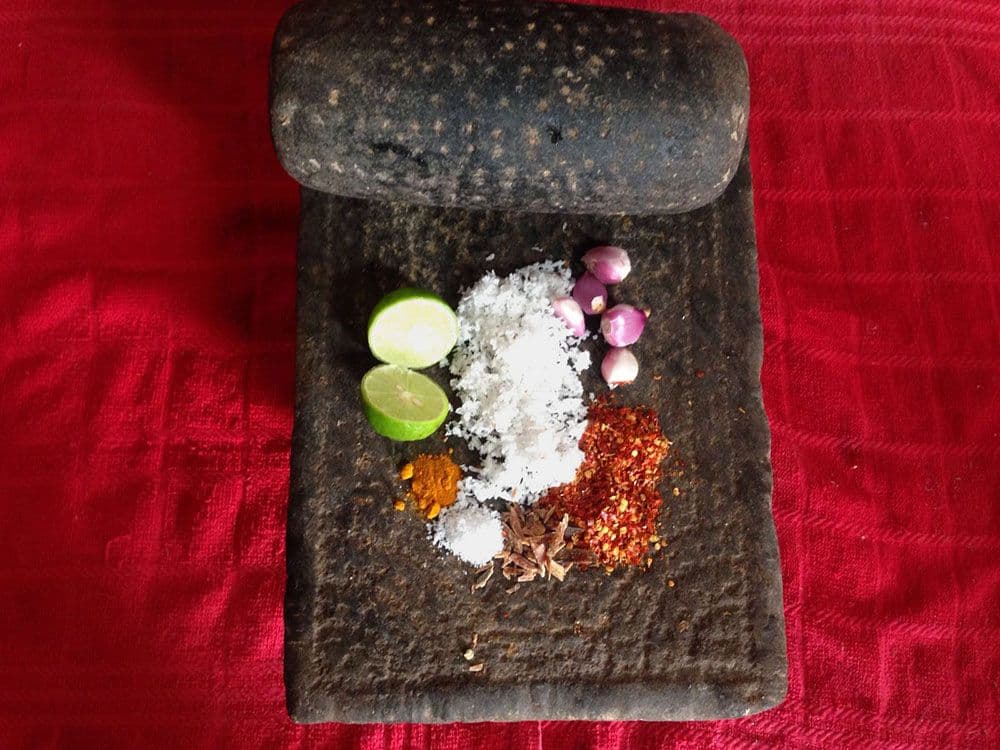
Forget your electric blender. To make the spice pastes (rempah), you will use the Miris Gala a large, flat granite slab with a heavy cylindrical rolling stone.
You will place dried chilies, onions, garlic, and salt on the stone and use your body weight to roll the cylinder back and forth. It crushes the ingredients rather than cutting them, releasing essential oils that blenders often miss. The result is a "Sambol" or paste with a texture and depth of flavor that is truly authentic.
The Final Feast
After hours of scraping, grinding, and stirring over the hot fire, the best part arrives.
You won't sit at a dining table. You will likely sit on a woven mat on the floor or in an open-air hut. The food is dished out onto a fresh Lotus Leaf or Banana Leaf.
The spread usually includes the dishes you cooked perhaps a creamy Dhal, a dark roasted Chicken Curry, a fresh Mallung (green leaf salad), and the Pol Sambol you ground by hand. Eating with your fingers, surrounded by the sounds of the village and the family who taught you, is an experience in mindfulness and gratitude.
How to Book This
These experiences are rarely advertised on big travel websites.
- Ask Your Guesthouse: Most family-run guesthouses in Udawalawe will be overjoyed to arrange a cooking session in their own kitchen or with a neighbor.
- Look for "Community" Tours: Several eco-lodges near the park offer these classes to support local village women.
It is a few hours of heat and hard work, but when you go home and cook a perfect Dhal for your friends, you will realize it was worth every drop of sweat.
Enjoyed this story? Share it
About the Author
Hannah Brooks
A passionate wildlife explorer and travel storyteller dedicated to uncovering the majestic elephant herds, epic whale watching encounters, legendary surf breaks, and the laid-back tropical spirit of Mirissa — the jewel of Sri Lanka's southern coastline.