The Safari Vehicle Debate: Open Jeep vs. Covered Jeep: What to Choose
Noah Williams
Safari Writer
You have picked your dates, booked your hotel, and packed your camera. Now comes the one logistical decision that can make or break your actual viewing experience: The Jeep.
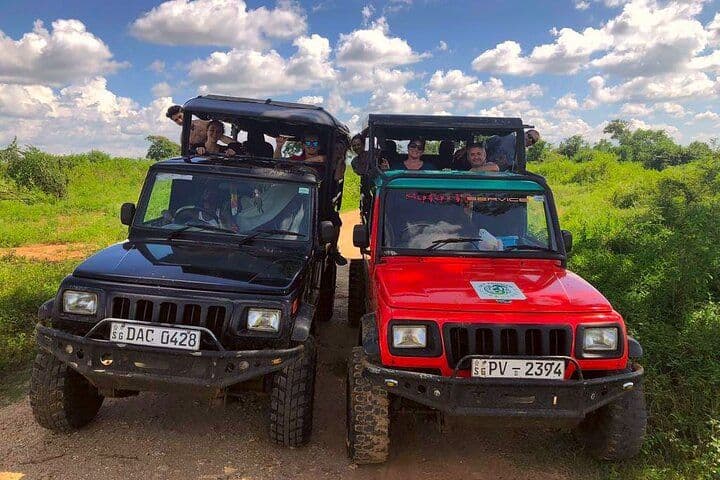
Many first-time travelers to Sri Lanka assume that "a jeep is a jeep." They expect a standard 4x4 and leave it at that. However, the quality, layout, and structure of safari vehicles in Udawalawe vary wildly. You might end up in a luxury modified truck with stadium seating, or you could find yourself squeezed onto a sideways bench in the back of an old pickup with a low roof.
To ensure you don't spend four hours staring at a canvas pillar instead of an elephant, here is the realistic breakdown of your vehicle options.
Understanding the "Modified Pickup"
First, a reality check. In Sri Lanka, 99% of "Safari Jeeps" are actually modified pickup trucks typically Toyota Hilux, Mitsubishi L200, or Tata models. The rear bed of the truck has been converted into a seating area for tourists.
The difference lies entirely in how that rear area is built.
Option 1: The "Tiered" Open Jeep (The Photographer's Choice)
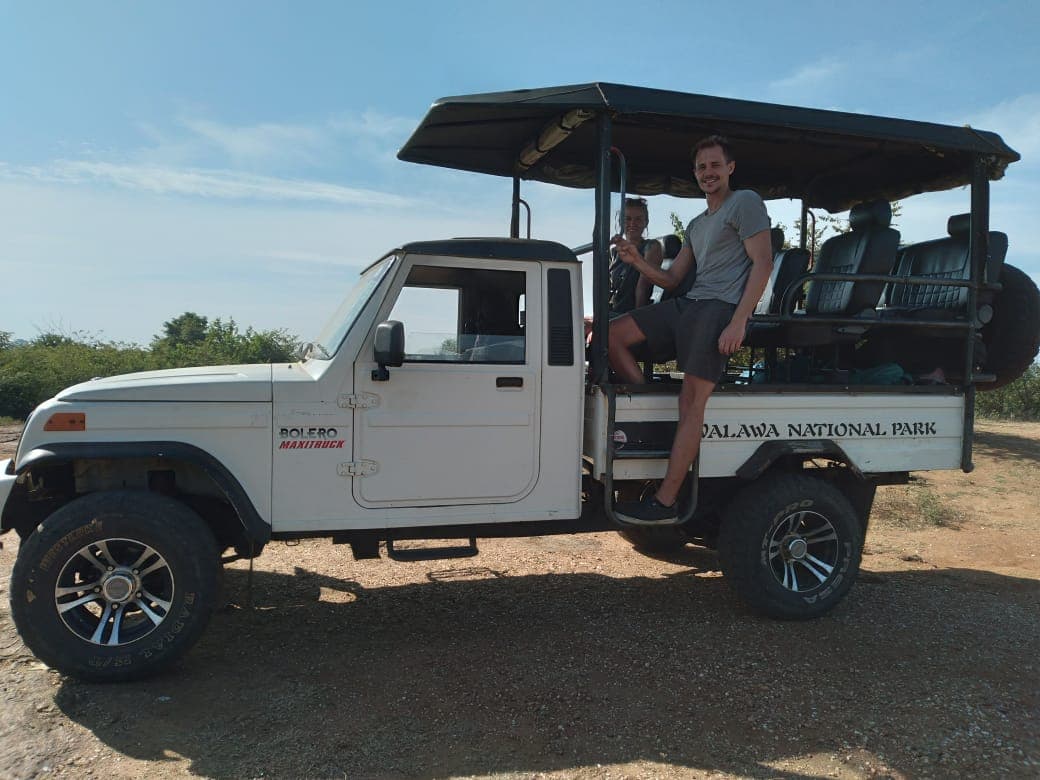
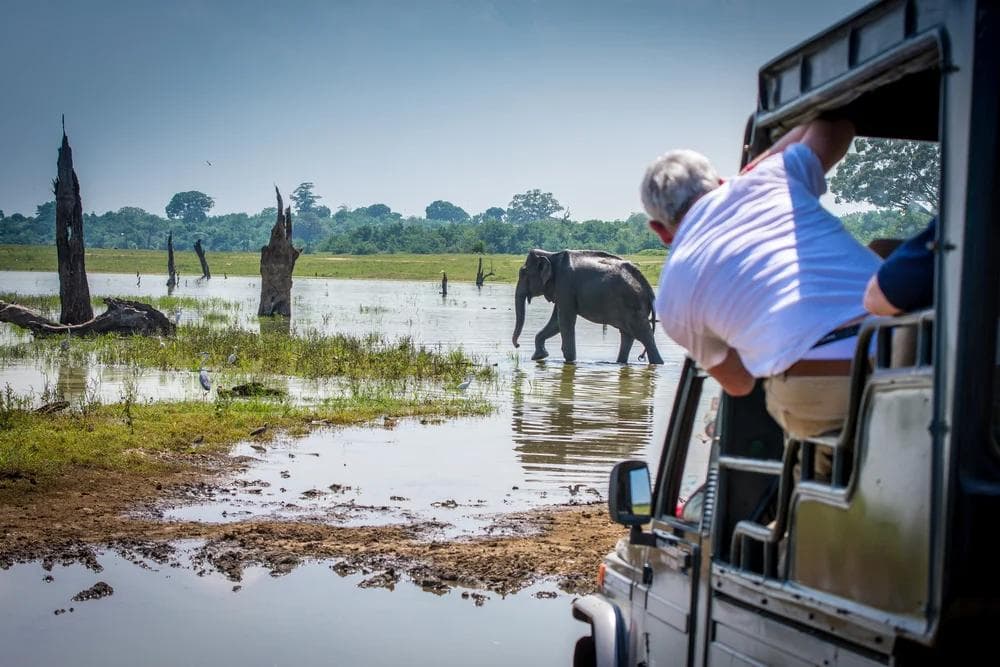
This is the gold standard for modern safaris. In these vehicles, the seats are individual, forward-facing bucket seats installed on ascending levels (like a movie theater or stadium).
Why it wins:
- Unobstructed Views: Because the back row is higher than the front row, nobody’s head blocks your view.
- 360-Degree Visibility: These jeeps usually have no roof or a removable roof, offering a complete view of the sky (crucial for bird watching) and the ability to see animals on all sides instantly.
- Comfort: You are sitting in a cushioned seat with armrests, not sliding around on a bench.
The Trade-off: You are fully exposed to the elements. If the sun is blazing, you will feel it. If it rains, you get wet (unless the driver quickly erects a temporary canopy).
Option 2: The "Covered" Jeep (Canopy Top)
These are the more traditional style vehicles. They feature a permanent hard or canvas roof over the seating area and usually have roll-down canvas flaps on the sides.
Why you might choose it:
- Sun Protection: If you are traveling with young children or elderly family members who cannot tolerate direct tropical sun for 3+ hours, the permanent shade is a lifesaver.
- Rain Security: Udawalawe weather can be unpredictable. If a monsoon shower hits, the flaps roll down in seconds, keeping you dry.
The Trade-off: The roof pillars create blind spots. If an elephant is standing at a certain angle, you might have to lean awkwardly to see around the metal bars. Furthermore, you cannot stand up to look at birds in the trees.
For the Photographers: Why Height Matters
If you are carrying a DSLR or a mirrorless camera with a zoom lens, you must request a vehicle with a "camera bar" or bean bag support.
Open, high-axle jeeps are superior here because they put you at a better angle. Being higher up means you are shooting down into the bush grass rather than staring directly into a wall of shrubs. The ability to stand up safely (while the vehicle is stopped) allows you to pivot quickly if a jackal runs across the path behind you.
The Dust Factor: A Realistic Warning
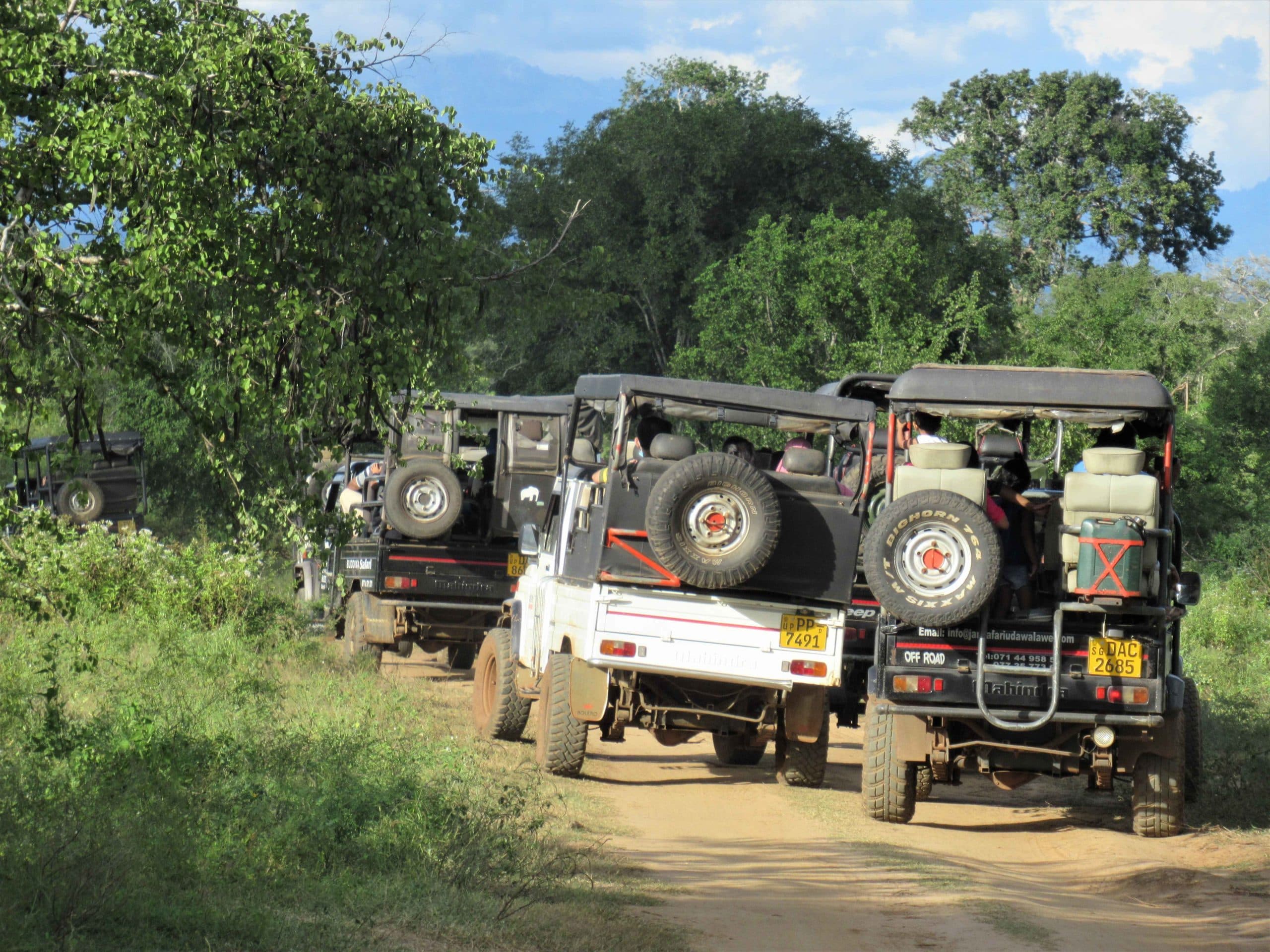
Udawalawe is dry, and the tracks are made of fine, red earth. No matter which jeep you choose, you will get dusty.
- Open Jeeps: You get the most dust. It will be in your hair, on your skin, and on your camera lens.
- Covered Jeeps: The vacuum effect often sucks dust into the back anyway, though it is slightly less direct.
Pro Tip: Bring a scarf or a "Buff" to cover your nose and mouth, and sunglasses are non-negotiable to keep grit out of your eyes.
How to Book the Right One (Script for Travelers)
Do not leave it to chance. When you are emailing your hotel or tour operator, do not just ask for a "safari." Use this specific language to get the best vehicle:
"We are interested in photography and would like to book a private high-elevated jeep with forward-facing tiered seats. Please confirm if the jeep has a roof or is open-top."
The Price Difference
Surprisingly, the price difference between a standard bench-seat jeep and a luxury tiered jeep is often negligible perhaps $5 to $10 USD difference for the whole vehicle. Given that you will be sitting in it for four hours bouncing over rutted tracks, paying the small premium for better suspension and a cushioned bucket seat is the best investment you can make for your trip.
Enjoyed this story? Share it
About the Author
Noah Williams
A passionate wildlife explorer and travel storyteller dedicated to uncovering the majestic elephant herds, epic whale watching encounters, legendary surf breaks, and the laid-back tropical spirit of Mirissa — the jewel of Sri Lanka's southern coastline.