Udawalawe Bird Watching: A Guide to the Park's Most Colorful Feathered Residents

Olivia Bennett
Safari Writer
When you think of Udawalawe, you think of elephants. And you should they are everywhere. But if you spend your entire safari looking only at the ground, you are missing half the show.
Udawalawe National Park is one of Sri Lanka’s unsung birdwatching heroes. With over 180 recorded species, the park offers a brilliant mix of aquatic birds, mighty raptors, and colorful endemics. Because the vegetation is largely low scrub and open grassland, spotting birds here is significantly easier than in the dense rainforests of Sinharaja.
Whether you are a serious "twitcher" with a life list or just someone who likes pretty colors, here is your realistic guide to the feathered residents of Udawalawe.
The Lords of the Sky: Raptors
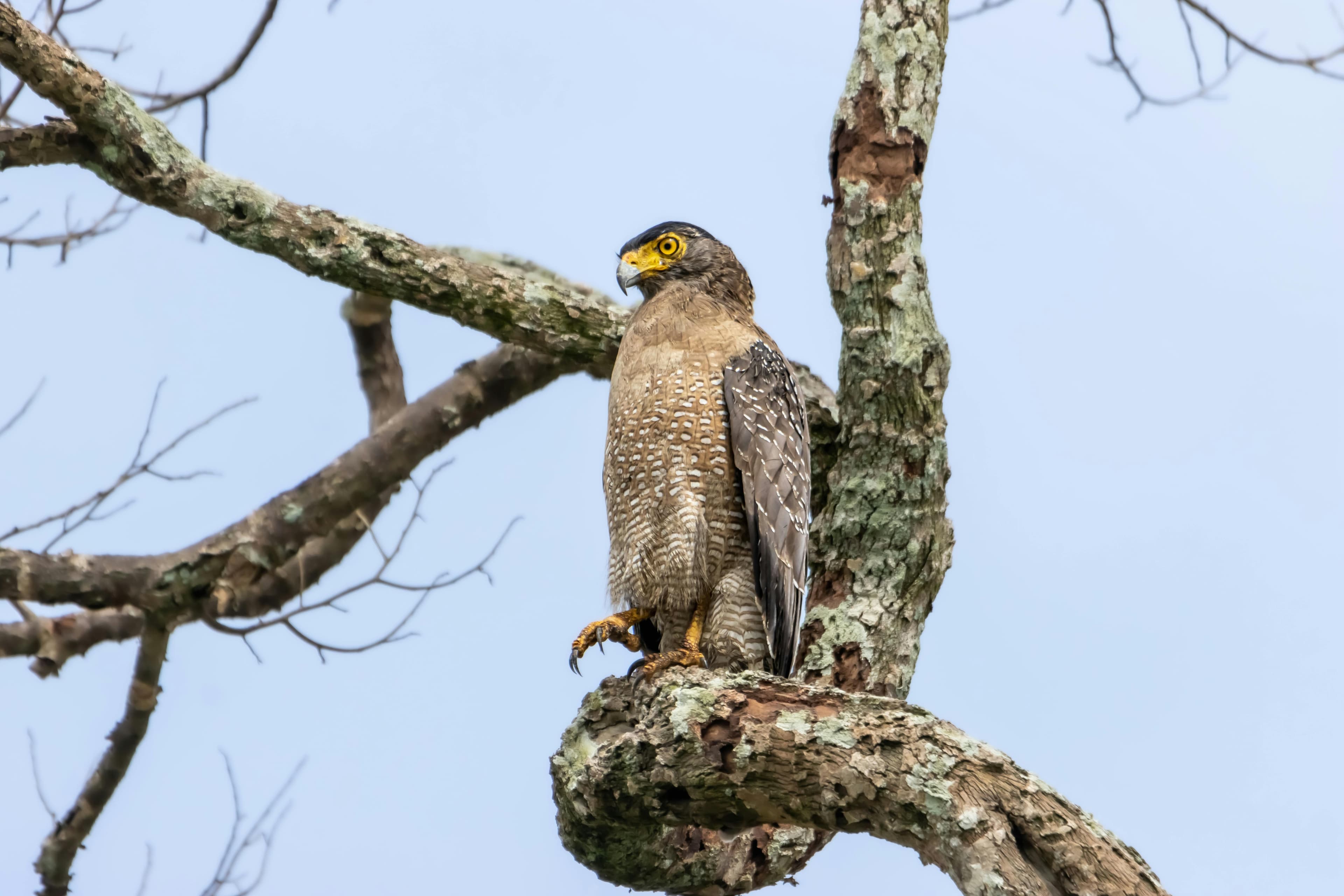
You don't need to look hard to find eagles here; you just need to look at the dead trees. The ghostly white branches of trees submerged in the reservoir or standing in the open plains are the favorite perches of the park's top predators.
- The Changeable Hawk-Eagle: A massive, powerful bird often seen perched stoically on high branches. It has a distinct crest and piercing eyes.
- The Crested Serpent Eagle: You will hear them before you see them a high-pitched, ringing call while soaring. As their name suggests, they hunt snakes in the tall grass.
- White-Bellied Sea Eagle: The king of the reservoir. Watch for them swooping down to the water surface to snatch fish with their massive talons.
The Water Crowds: Storks and Pelicans
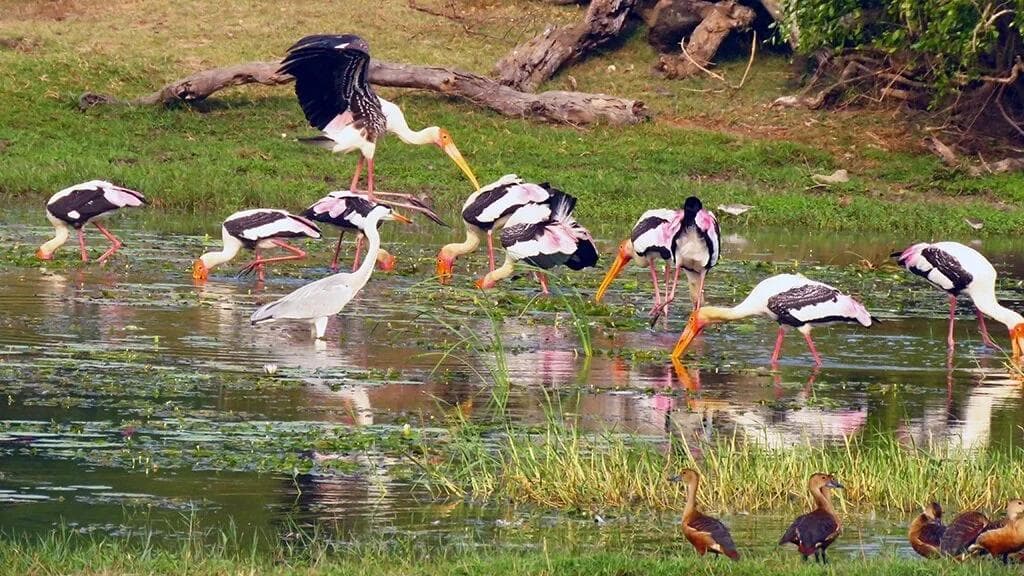
The Udawalawe Reservoir is the social hub of the park. Drive down to the water’s edge, and you will find a chaotic, busy, and beautiful scene.
- Painted Storks: These are hard to miss. With their splash of pink on the wings and bright orange faces, they wade through the shallows in large groups.
- Spot-Billed Pelicans: These giants float like battleships on the water. Watching a flock of them herd fish together is a fascinating display of teamwork.
- The Cormorants: Look for the Little Cormorants drying their wings on rocks, looking like black statues worshipping the sun.
Small but Mighty: The Color Explosion
While the big birds get the glory, the smaller species provide the color. You will often see flashes of brilliant blue or green darting across the jeep track.
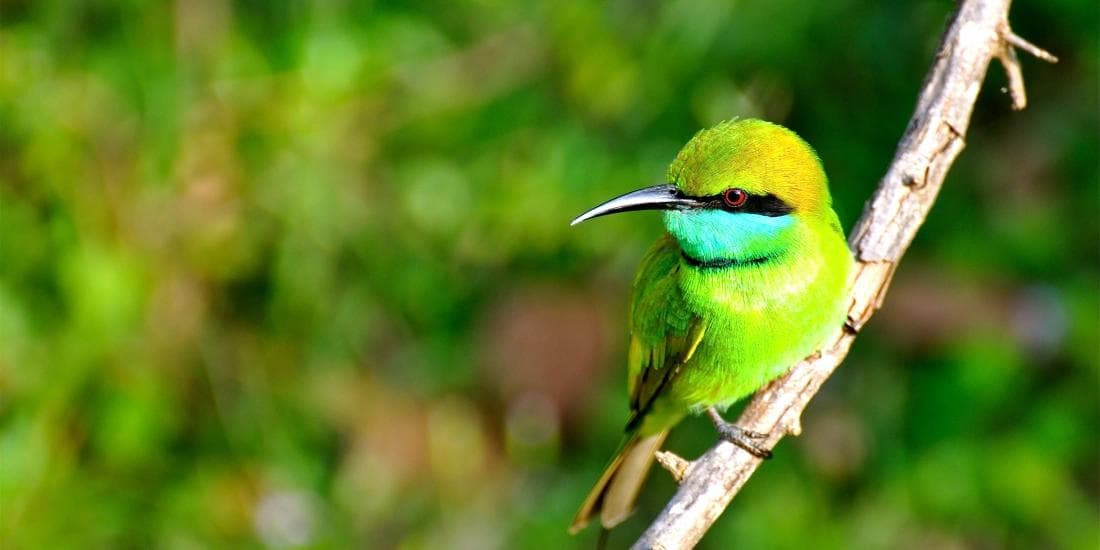
- Green Bee-Eaters: These are the gems of Udawalawe. Tiny, vibrant green birds with a reddish eye stripe. They sit on low branches and perform acrobatic loops in the air to catch insects.
- Indian Roller: A drab bird when sitting, but when it takes flight, it reveals shocking shades of electric blue on its wings.
- Sri Lanka Grey Hornbill: An endemic species (found only in Sri Lanka). Look for them in the taller trees; they have a distinct curved beak and a long tail.
The Peacock Paradox
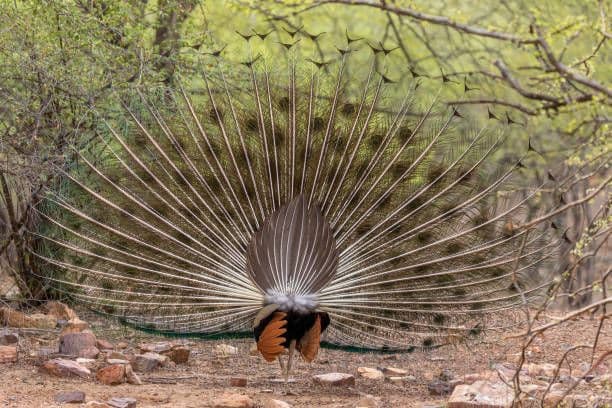
You will see peacocks. You will see a lot of peacocks.
In Udawalawe, the Indian Peafowl is incredibly common. At first, you will ask your driver to stop for every single one. By hour three, you might be asking him to keep driving! However, the open plains here provide the perfect stage for males to practice their "leks" (mating dances). Seeing a male vibrating his massive tail fan in the morning light is a spectacle that never truly gets old, no matter how common they are.
Realistic Birding Tips for Non-Experts
- Bring Binoculars: This is non-negotiable. The elephants are big enough to see with the naked eye, but a bee-eater at 20 meters is just a green blur without optics.
- Go in the Morning: Birds are most active from 6:00 AM to 9:00 AM. By midday, the heat drives them into the deep shade, and the park goes quiet.
- Tell Your Driver: Most jeep drivers assume you only want elephants. If you tell them, "I love birds, please stop for eagles and rollers," they will completely change how they drive, scanning the treetops instead of just the road.
Final Thoughts
Udawalawe proves that you don't need to be a professional ornithologist to enjoy birdwatching. The birds here are big, colorful, and surprisingly bold. So, on your next safari, when the elephants are hiding in the bush, look up the sky is full of life
Enjoyed this story? Share it
About the Author
Olivia Bennett
A passionate wildlife explorer and travel storyteller dedicated to uncovering the majestic elephant herds, epic whale watching encounters, legendary surf breaks, and the laid-back tropical spirit of Mirissa — the jewel of Sri Lanka's southern coastline.